
Every year, hundreds of Indian brands launch new products. Some become household names within just a few years, while others remain almost invisible despite being in the market for decades.
The difference is not always product quality.
More often, it is content consistency, creative storytelling, and video-first marketing.
Today’s customers don’t discover brands on store shelves first. They discover them on Instagram Reels, YouTube Shorts, Facebook, LinkedIn, and influencer content.
Let’s compare how modern brands are using content to grow.
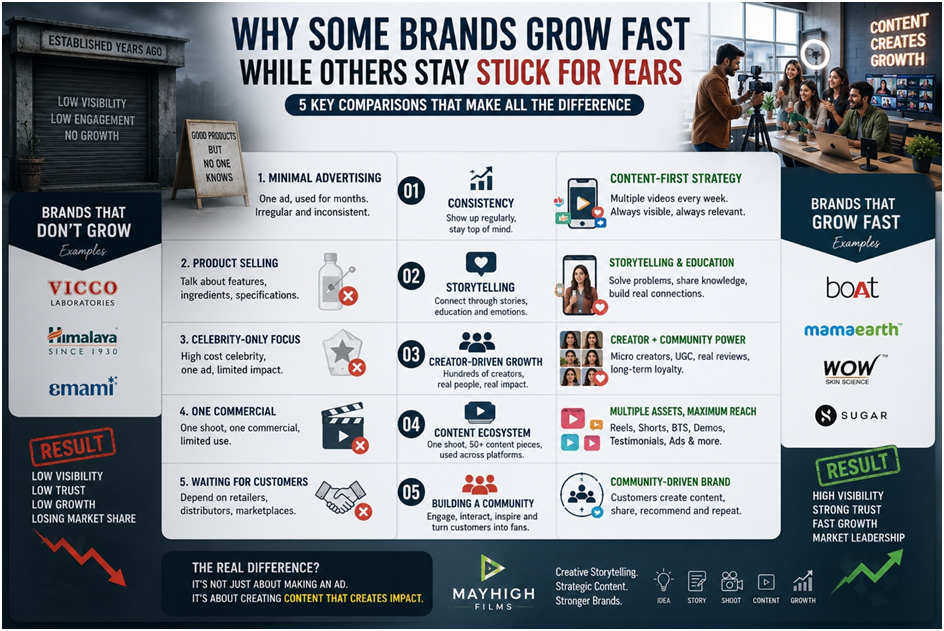
Minimal Advertising vs Content-First Strategy
Traditional Brand
Many traditional businesses create one advertisement, use it for months, and then stop producing content.
Result:
- Low engagement
- Low recall
- Slow brand growth
Modern Brand
Brands like boAt built massive awareness by continuously producing product launches, influencer collaborations, short-form videos, lifestyle campaigns, memes, and creator content.
People didn’t just see products.
They kept seeing the brand everywhere.
Consistency creates familiarity. Familiarity creates trust.
Product Selling vs Storytelling
Traditional FMCG Advertising
Many brands still create advertisements explaining product features.
“Our product is better.”
“Our quality is higher.”
“Our ingredients are natural.”
Modern Beauty Brands
Brands such as Mamaearth and Minimalist built audiences by educating customers about skincare routines, ingredients, customer journeys, and daily lifestyle problems—not just by promoting products.
Instead of selling products…
They solved problems.
Consumers remember solutions more than specifications.
Celebrity Marketing vs Creator Marketing
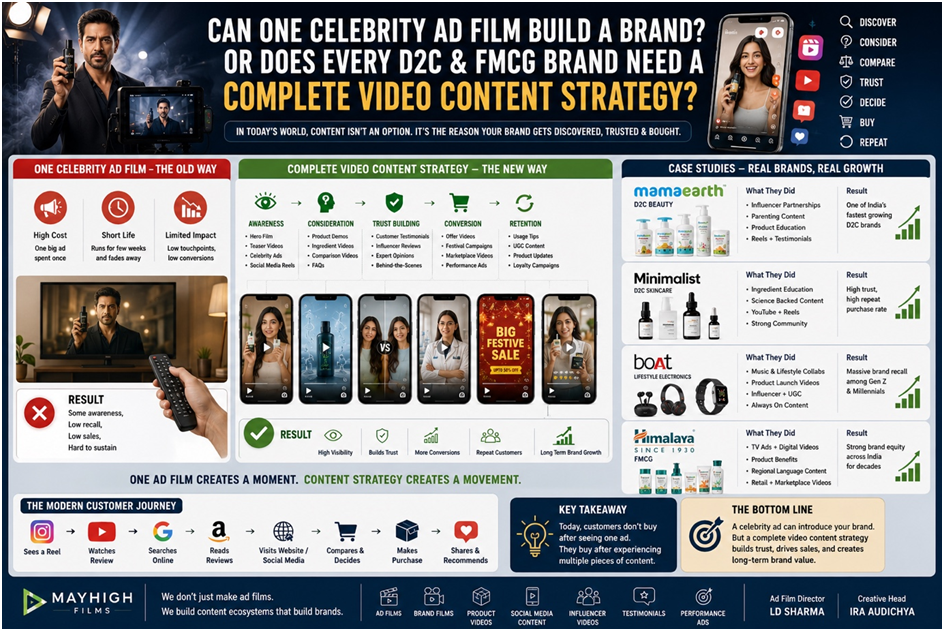
Earlier, brands believed one celebrity commercial could change everything.
Today, successful companies combine celebrities with hundreds of creators producing authentic content every week.
Instead of one advertisement reaching millions…
Thousands of creators generate millions of conversations.
Content now travels faster than celebrity recognition alone.
One Commercial vs Content Ecosystem
Many businesses still think advertising means producing one TV commercial.
Modern brands think differently.
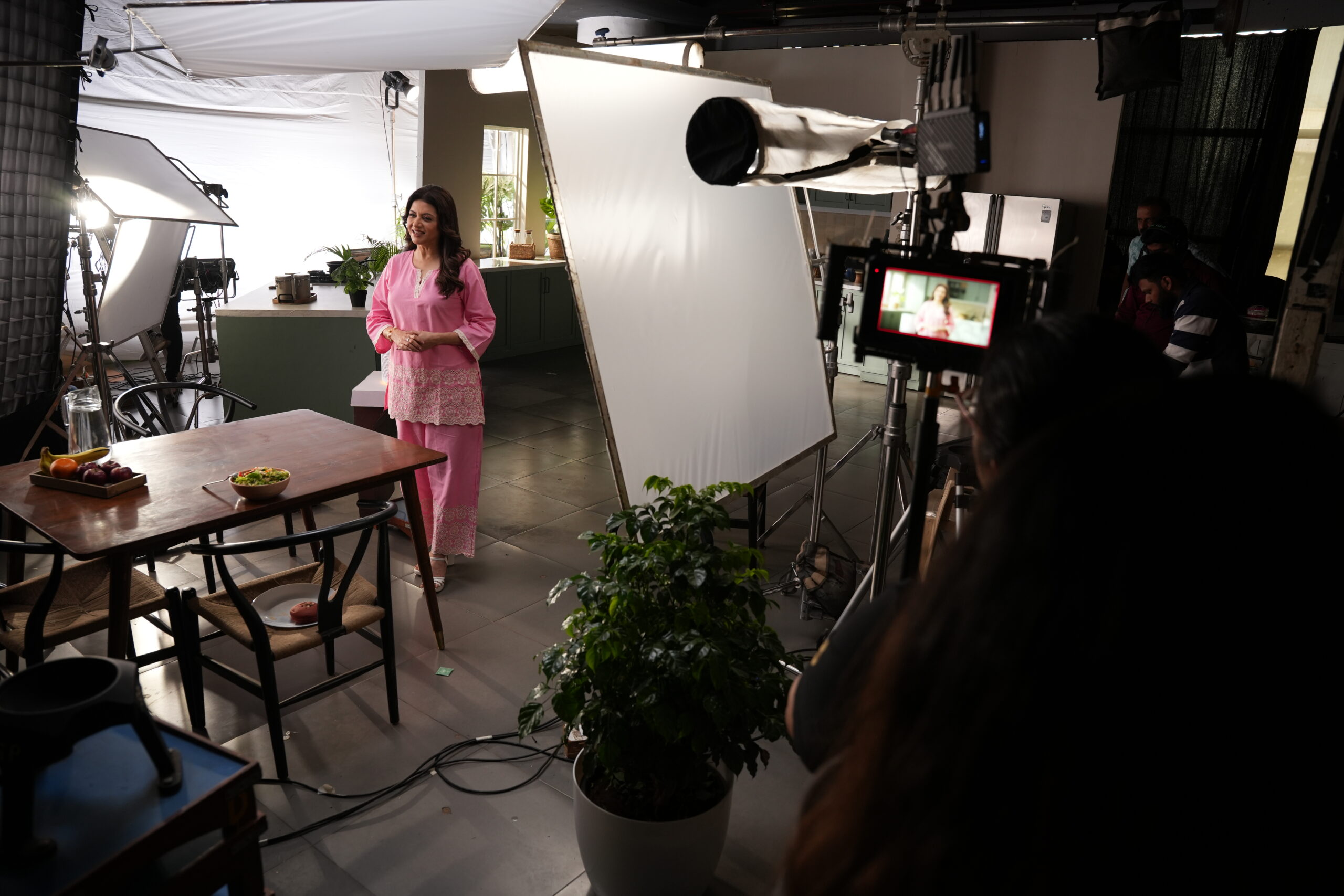
One commercial shoot can create:
- Hero Brand Film
- 30 Instagram Reels
- Product Demo Videos
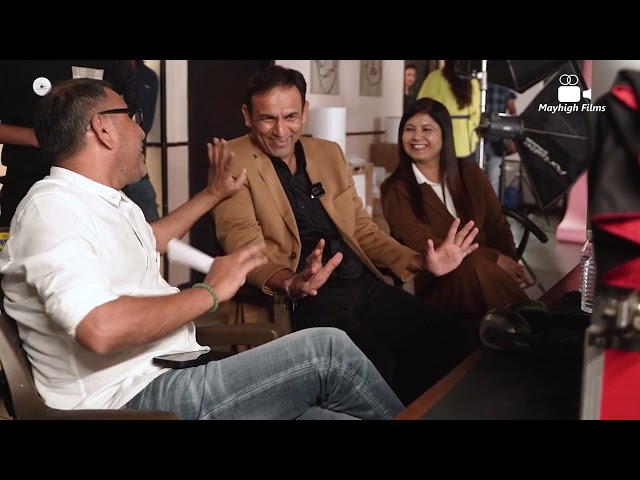
- Behind-the-Scenes Content
- Founder Interviews
- Customer Testimonials
- Festival Campaigns
- YouTube Shorts
- LinkedIn Videos
- Influencer Assets
One production day becomes months of marketing content.
That is one reason digital-first brands stay visible throughout the year.
Waiting for Customers vs Building a Community
Many established brands still depend mainly on distributors, retailers, or marketplaces.
Digital-first brands build communities.
Customers comment.
Share experiences.
Recommend products.
Create user-generated content.
This creates a continuous marketing engine that advertising alone cannot achieve.
Brands no longer compete only on products.
They compete on attention.
The Biggest Lesson for Indian Startups
Many startups ask,
“Should we spend money on advertising?”
A better question is,
“How long can we survive if customers don’t know we exist?”
The biggest companies today are investing heavily in video content because attention has become the world’s most valuable marketing asset.
Consumers buy from brands they recognize.
Recognition comes from repeated, creative, high-quality content—not from one advertisement.
The Mayhigh Films Perspective
At Mayhigh Films, every campaign is designed as a long-term content strategy rather than a one-time commercial. Under the leadership of Ad Film Director LD Sharma and Creative Head Ira Audichya, the focus is on creating a complete content ecosystem—hero films, social media reels, behind-the-scenes videos, product demonstrations, founder stories, and campaign assets that keep brands visible throughout the year.
Because the question is no longer:
“Should we make an advertisement?”
The real question is:
“How many pieces of valuable content can one great advertisement create?”